China’s 7 Major Water Projects: Engineering That Shaped the Land
- 1872113757
- 4 days ago
- 3 min read
Water has shaped China’s civilization for millennia — determining settlement patterns, agriculture, trade, and political power. Floods once overturned dynasties; irrigation and river control helped sustain them. Today, China’s most significant water projects — from ancient irrigation systems to modern mega‑dams — still define how the country manages risk, resources, and development.
1. Dujiangyan Irrigation System
Sichuan | Built: 256 BC
One of the world’s oldest functioning waterworks, Dujiangyan solved an enduring engineering paradox: how to control devastating floods while irrigating farmland without blocking a river. Designed by governor Li Bing, the system uses natural forces and terrain to manage water rather than relying on dams. Its three key elements — the fish‑mouth levee (Yuzui), the bottle‑neck channel (Baopingkou), and the flying sand weir (Feishayan) — automatically split, regulate, and clean river flow for flood control and farm irrigation. The ingenious layout still channels water to the Chengdu Plain, making this region one of China’s most productive agricultural centers. The design has endured floods, earthquakes, and centuries of use, and Dujiangyan is recognized by UNESCO as both a World Cultural Heritage and an Irrigation Engineering Heritage site.

Three Gorges Dam
Yichang, Hubei | Construction: 1994–2012
The largest hydropower station in the world by installed capacity, the Three Gorges Dam spans the Yangtze River and serves multiple strategic functions:
Flood control for downstream cities along China’s most populous river corridor
Massive power generation feeding grids across central and eastern China
Improved inland navigation via a series of ship locks Its reservoir stretches approximately 600 km, reshaping river transport and regional infrastructure. Despite environmental and resettlement controversies, Three Gorges is a definitive symbol of China’s modern engineering capability and its determination to manage one of the world’s great waterways.

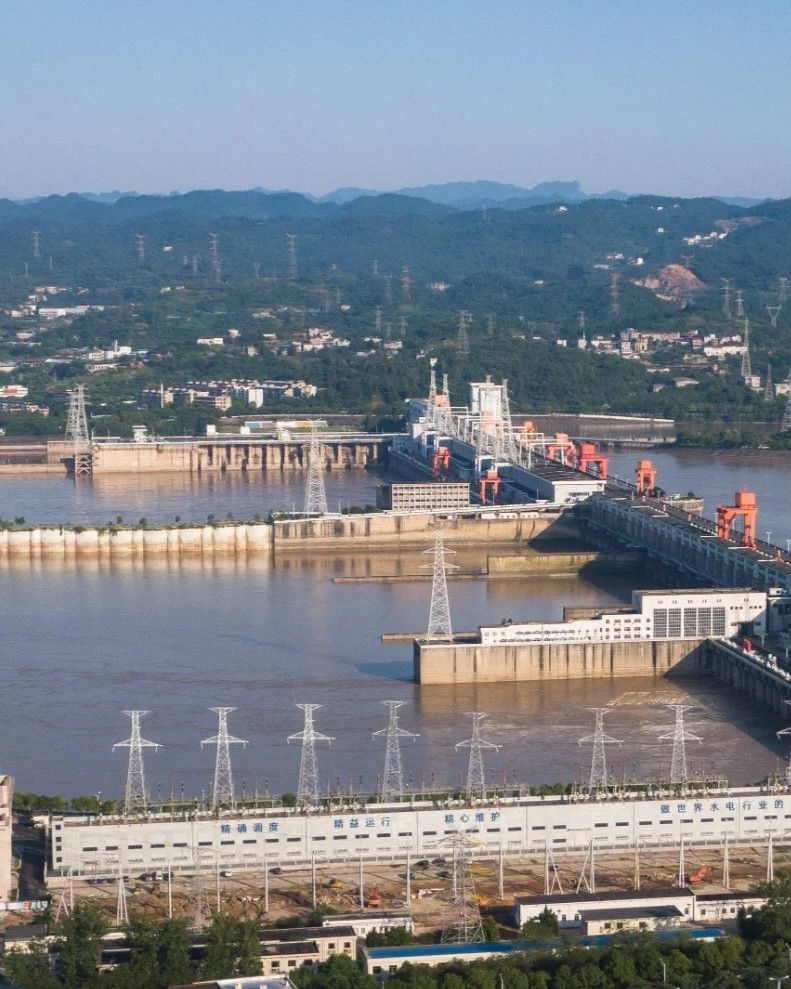
Gezhouba Dam
Yichang, Hubei | Construction: 1970–1988
As the first large‑scale hydropower and water control project on the Yangtze, Gezhouba was a technological milestone for modern China. Designed to regulate the Yangtze’s flow below the Three Gorges region, it features run‑of‑river generation with multiple powerhouses and ship locks capable of passing 10,000‑ton vessels. Over the past 40+ years, it has generated hundreds of billions of kilowatt‑hours of electricity, helped control seasonal floods, and supported navigation improvements that preceded and facilitated the Three Gorges project. Its successful operation also provided critical experience and talent development for China’s later mega‑projects.
South–North Water Transfer Project
Nationwide | Began: 2002 (ongoing)
China’s boldest attempt to rebalance uneven freshwater distribution, the South–North Water Transfer Project channels water from the relatively wet south to the arid north. It involves three massive routes (eastern, central, and planned western), thousands of kilometres of canals, tunnels, and aqueducts, and the yearly movement of billions of cubic metres of water. The major initial phases (eastern and central) began operation in the 2010s, supplying critical drinking and industrial water to regions including Beijing and Tianjin. Although complex and costly, this project represents one of the world’s most ambitious efforts to adjust hydrological geography for societal needs.

Xiaolangdi Dam
Henan | Yellow River | Construction: 1994–2000
Built on the notoriously volatile Yellow River, Xiaolangdi addresses two ancient challenges in one structure: flood control and sediment management. The Yellow River’s heavy silt historically made flood control extremely difficult; Xiaolangdi’s design allows controlled flushing of sediment and stabilization of riverbeds downstream. Standing 154 m tall with a reservoir capacity of 12.8 billion m³, the dam also generates hydropower, irrigates farmland, and protects cities from overrunning floodwaters.

Baihetan Dam
Sichuan–Yunnan Border | Construction: 2017–2021
The world’s second largest hydropower station after Three Gorges, Baihetan represents the cutting edge of 21st‑century dam engineering. Its 289 m double‑curvature arch structure on the Jinsha River — a principal upper reach of the Yangtze — supports 16 GW of installed capacity via sixteen 1 GW hydro units. Fully operational since late 2022, the dam generates over 60 TWh of clean electricity each year, reduces millions of tons of coal consumption, and contributes to China’s shift toward cleaner energy. It also forms part of a broader “clean energy corridor” linking western hydropower resources with eastern demand centres.

Liujiaxia Dam
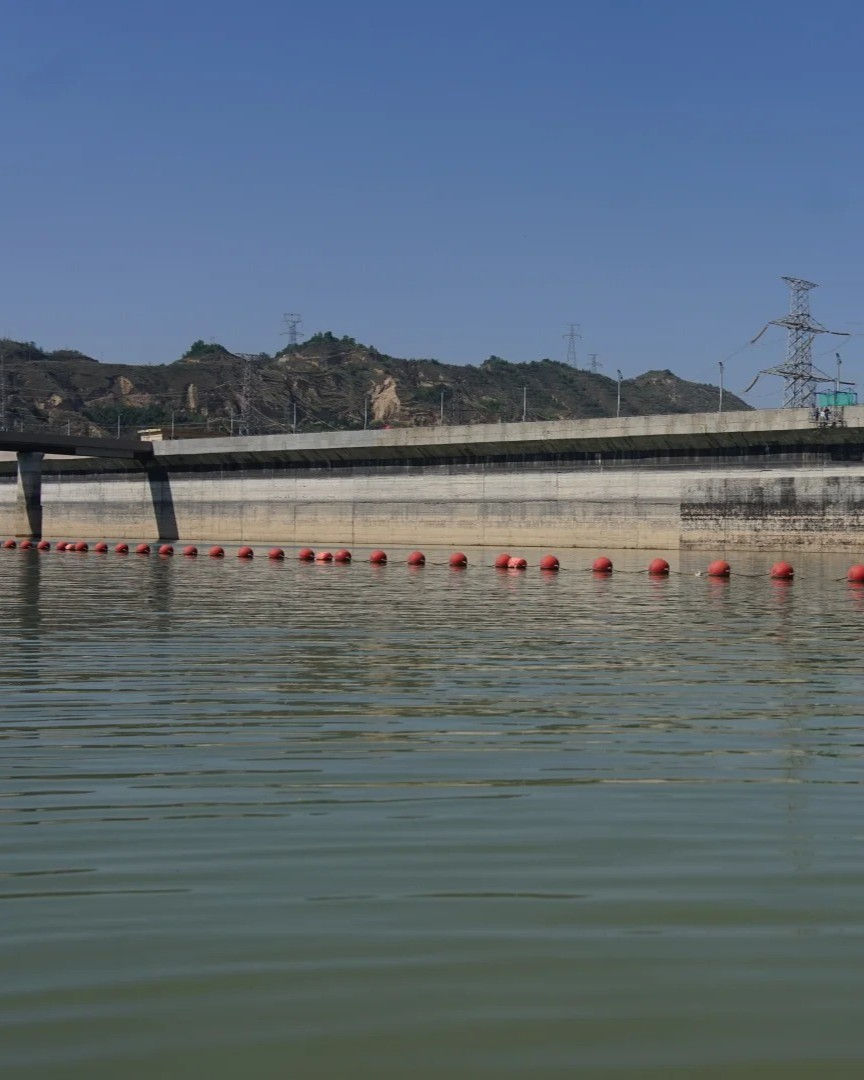
Gansu | Upper Yellow River | Construction: 1958–1969
One of China’s earliest major hydroelectric projects in the northwest, Liujiaxia Dam sits in a dramatic gorge on the Yellow River, creating a large reservoir that supports power generation, irrigation, and flood control. When it became fully operational in the early 1970s, it was China’s largest hydroelectric facility and remains an important regional power source. Its construction reflects early attempts by the People’s Republic to develop inland energy and water resources in challenging terrain.
Across two millennia, China’s water projects illustrate a continuous thread: strategic engineering to mitigate risk and harness nature. From Dujiangyan’s dam‑free flood control to Baihetan’s titanic turbines, these systems showcase how river management still drives settlement, industry, agriculture, and climate strategies. Understanding China’s landscape — from plains to plateaus — is easier when you follow its waterways.

Comments