Tibet’s Top 10 Cultural Treasures: A Simple Guide
- 1872113757
- 2 days ago
- 4 min read
Tibet can feel overwhelming at first. Sacred mountains rise everywhere, prayer flags flutter in the wind, and monasteries aren’t just landmarks — they’re part of daily life. For travelers, the challenge isn’t finding culture, but knowing where to start. This guide focuses on ten cultural treasures that best explain how Tibetan society developed over more than a thousand years. Together, they form a clear framework for understanding Tibetan belief, governance, art, and everyday life.
Potala Palace — Lhasa
Political and spiritual center of old Tibet Time
Original construction: 7th century
Major expansion: 17th century (5th Dalai Lama)
Cultural significance
Winter residence of successive Dalai Lamas
Center of both religious authority and political administration
Symbol of unified spiritual–political governance in traditional Tibet
Additional details Rising over 3,700 meters above sea level, the Potala Palace is the highest ancient palace complex in the world. Local legend says the palace stands where a mythical white elephant descended, symbolizing the union of spiritual and political authority. Inside, chapels, tombs, murals, and libraries reflect centuries of Tibetan art, history, and Buddhist cosmology. The murals include depictions of historical events, the lineage of Dalai Lamas, and stories from Tibetan epics.

Jokhang Temple — Lhasa
The spiritual heart of Tibetan Buddhism Time
Built in the 7th century during the Tibetan Empire
Cultural significance
Houses the Jowo Shakyamuni, Tibet’s most sacred Buddhist statue
Core pilgrimage destination for Tibetans across regions and sects
Spiritual center independent of political authority
Additional details & myths Legend says King Songtsen Gampo’s Chinese and Nepali wives brought sacred statues to Tibet, including the Jowo, which is believed to contain a fragment of Buddha’s essence. Pilgrims circumambulate the temple for hours or even days, sometimes walking thousands of kilometers to reach it. The temple also houses murals depicting celestial beings, mythic kings, and the first introduction of Buddhism in Tibet.

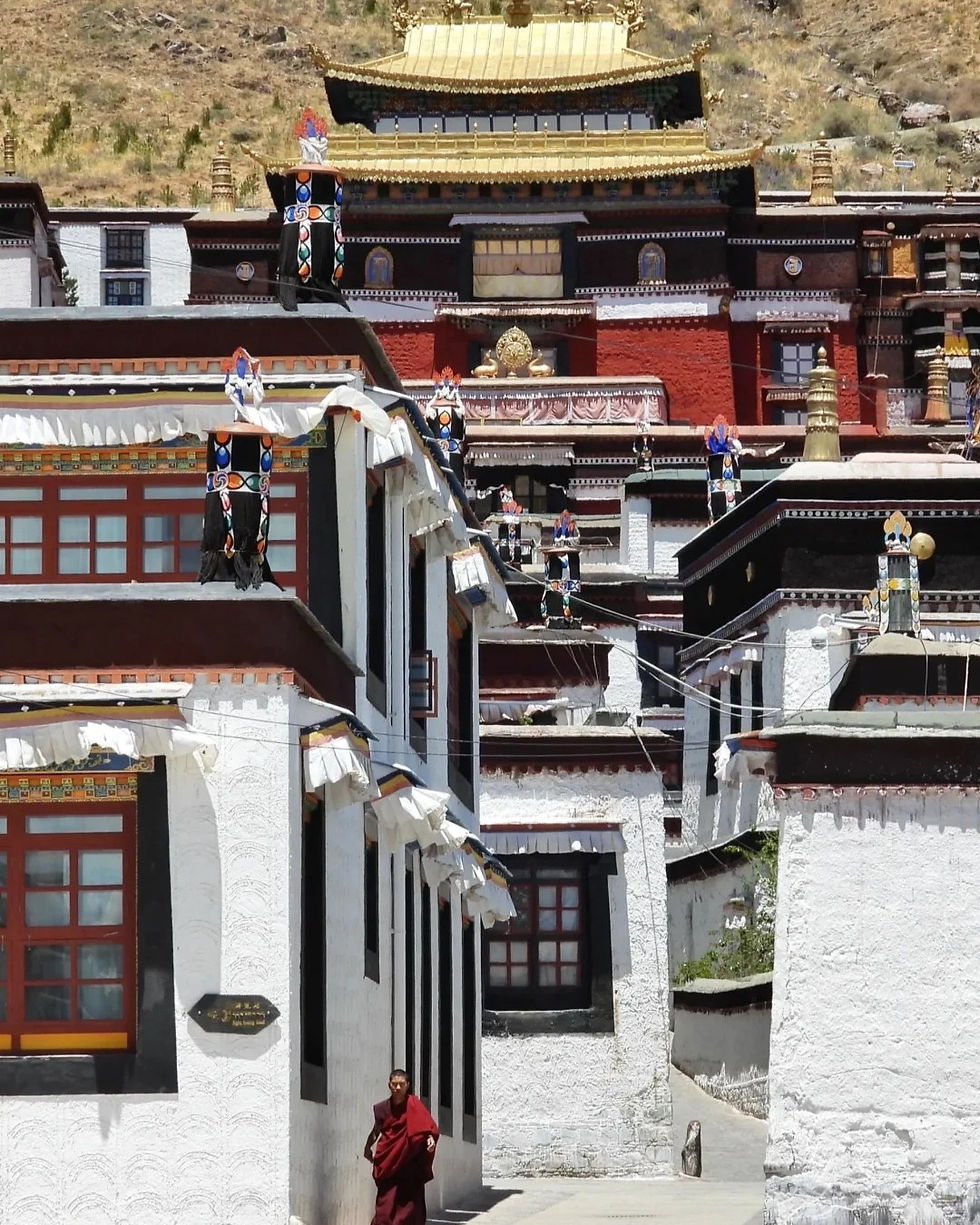
Tashilhunpo Monastery — Shigatse
Seat of the Panchen Lama Time
Founded in 1447
Cultural significance
Traditional seat of the Panchen Lama
Major Gelug monastery outside Lhasa
Home to the world’s largest seated Maitreya Buddha statue
Additional details & myths The massive Maitreya Buddha is believed to bless pilgrims who ascend its steps, granting compassion and wisdom. The monastery complex contains stupas, assembly halls, and monks’ residences, many adorned with murals of Tibetan history and cosmology. It also preserves records of the Panchen Lama lineage and regional governance in Tibet.
Samye Monastery — Shannan
Birthplace of organized Tibetan Buddhism Time
Established in the late 8th century (circa 779)
Cultural significance
First fully functioning Buddhist monastery in Tibet
Introduction of formal monastic life and Buddhist education
Center of early translation of Buddhist texts into Tibetan
Additional details & myths Built in a mandala-inspired layout symbolizing the Buddhist cosmos, Samye is said to have been magically constructed overnight with help from celestial beings. It is also the site where Padmasambhava and Shantarakshita established early Tibetan Buddhist rituals. The monastery contains murals of Indian Buddhist masters, Tibetan kings, and local protective deities.

Ganden Monastery — near Lhasa
Cradle of the Gelug tradition Time
Founded in 1409 by Tsongkhapa
Cultural significance
Birthplace of the Gelug school
Major center for philosophical debate and monastic discipline
Shaped the education system of Tibetan Buddhism
Additional details & myths
Legend holds that Tsongkhapa received divine inspiration from Avalokiteshvara while choosing the site. Ganden’s hilltop position represents spiritual ascent and the pursuit of wisdom. Ancient texts and debate records are preserved here, and the monastery was historically a training ground for high-ranking lamas.

Sera Monastery — Lhasa
Where debate becomes devotion Time
Founded in 1419
Cultural significance
Center for monastic debate practice
Training ground for Buddhist logic and reasoning
Living example of oral learning traditions
Additional details & myths Debates at Sera are vigorous and public, sometimes compared to cosmic battles of wisdom versus ignorance. Murals depict Buddhist cosmology and historical episodes of Tibetan monastic life. Pilgrims and monks alike see debates as a method of spiritual cultivation, not just academic exercise.

Kumbum Monastery — Qinghai
A bridge between Tibet and China’s heartland Time
Founded in 1583
Cultural significance
Birthplace of Tsongkhapa
Major Gelug learning center outside Tibet
Cultural link between Tibetan and Han regions
Additional details & myths Local folklore says prayers at Kumbum can unify Tibetan and Han peoples spiritually. The monastery contains nine-level pagodas with hundreds of chapels and thousands of murals combining Tibetan and Chinese artistic elements. Kumbum became a hub for pilgrims traveling to both Tibet and central China.

Bon Religion Sites — Across Tibet
The faith that came before Buddhism Time
Pre-Buddhist origins, over 2,000 years old
Cultural significance
Indigenous spiritual system of Tibet
Influenced Tibetan cosmology, rituals, and symbols
Still actively practiced today
Additional details & myths Bon’s sacred mountains, sky spirits, and nature rituals predate Buddhism. Stories include shape-shifting spirits, protective mountain deities, and ancestral guardians, which still guide pilgrimages and local festivals.

Thangka Art — Across Tibet
Sacred art as visual teaching Time
Developed alongside Tibetan Buddhism (7th–8th century onward)
Cultural significance
Visual teaching tools for meditation and learning
Strict symbolic and artistic rules
Portable religious education
Additional details & myths Thangkas depict cosmic hierarchies, historical events, and moral stories. Creating a thangka is considered a meditative practice; some believe painting a deity brings spiritual merit and protection.

Tibetan Opera — Across Tibet
Living folk culture Time
Formed around the 14th century
Cultural significance
One of Asia’s oldest continuous theatrical traditions
Combines religion, folklore, and social values
Performed during festivals and communal gatherings
Additional details & myths Many Tibetan operas are based on local myths, epics, and historical events, featuring gods, kings, and heroes. Stories often convey moral lessons, heroic deeds, and communal values while keeping ancient music and mask traditions alive.

Tibet’s culture isn’t frozen in time — it’s practiced daily, from prayer wheels to debates, festivals to performances. These ten cultural treasures offer a clear entry point into a civilization shaped by belief, landscape, and resilience. For travelers willing to slow down and observe, Tibet reveals itself not as mysterious — but deeply human.


Comments